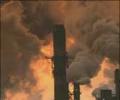
The Central Pollution Control Board has declared Gujarat as the most polluted state in India.
This deterioration in air quality led to prompting enforcement of Stage II of the Graded Response Action Plan (GRAP) in the national capital.

Delhi recorded its coldest January morning in three years with the minimum temperature dropping to 3 degrees Celsius. Cold wave conditions are expected to persist, and air quality has deteriorated to the 'very poor' category.

The Maharashtra government has officially declared the Sarvajanik Ganeshotsav as the 'State Festival of Maharashtra', emphasizing its commitment to preserving and promoting the festival's cultural legacy. The government has also addressed issues related to POP idols and pledged financial support for celebrations.

Lawful possession means having both actual control over a property and a valid legal right to keep it, usually based on a registered sale deed, lease agreement, or lawful allotment.

The eight critically polluted areas are Ludhiana (Punjab), Varanasi-Mirzapur (Uttar Pradesh), Agra (Uttar Pradesh), Bhavnagar (Gujarat), Cuddalore (Tamil Nadu), Dombivalli (Maharashtra), Aurangabad (Maharashtra) and Navi-Mumbai (Maharashtra).
Forty years after the Bhopal gas tragedy, 377 tons of hazardous waste has been shifted from the defunct Union Carbide factory for its disposal, an official said.

PM2.5 pollution in the national capital has reduced by over 7 per cent in four years, from 108 micrograms per cubic metre in 2019 to 99.71 micrograms per cubic metre in 2022, the report by NCAP Tracker said.

A smoke-free zone would be demarcated around the Golden Temple at Amritsar to shield the historic shrine from the increasing pollution in its vicinity.

Upset fans express disappointment after 4th T20I abandoned due to air pollution.

The AQI recorded in Mumbai at 8 am was 131, categorised as 'moderate', as per the Central Pollution Control Board.

Heavy rains lashed Delhi, leading to a red alert, traffic snarls, and waterlogging. The IMD predicts continued rainfall.
The sustainable impact of this process is under scrutiny, Tripathi added.

'We will need to review the scheduling of matches between 15 December to 15 January in north India.'

The CPCB said reduction in PM10 and PM2.5 levels primarily indicate depletion in combustion and industrial sources of pollution which are common to both fractions of particulate matter.

Delhi's air quality improved for the second consecutive day on Thursday, with the Air Quality Index (AQI) recorded in the "moderate" category at 165. This marks a significant improvement from the "poor" category recorded on Tuesday. Several restrictions imposed under Stage 4 of the Graded Response Action Plan (GRAP) were lifted, but some restrictions under Stage 2 remain in place. The Decision Support System (DSS) has not been updated since Friday, with technical difficulties hindering the update of data for the last six days.

The Central Pollution Control Board on Monday reviewed the air quality in Delhi-NCR observing that the contribution of stubble burning may rise in the next five days with the AQI fluctuating between 'very poor' and 'severe' categories.
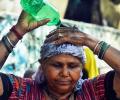
Temperatures are likely to remain in a similar range until Thursday, with a gradual fall expected from June 13.
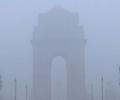
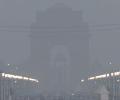
The India Meteorological Department (IMD) reported that very dense fog began forming around 5.30 am, resulting in a thick haze over different parts of the national capital.
Water is drawn for agriculture, industry and cities, but only waste is returned to the river.

As many as 12 flights were diverted at the Delhi airport between 3 pm and 4 pm due to adverse weather conditions, an official said.

A group of people in Dhar, Madhya Pradesh, performed 'Shavasana' (corpse pose) to protest against the proposed disposal of Union Carbide waste, connected to the Bhopal gas tragedy, in the district. They claim the disposal would harm the health of locals and the environment. The waste has been brought from Bhopal for incineration in Pithampur. Protests have been ongoing since the arrival of the waste last month, and local authorities are conducting an awareness campaign to address concerns.

In India, air pollution is most severe in the Indo-Gangetic Plain (northern India), where topography and meteorology concentrate pollution from energy, mobility, industry, agriculture, and other activities, the researchers said.
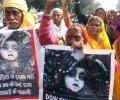
The work to remove 377 metric tonnes of hazardous waste from the now-defunct Union Carbide factory in Bhopal has begun. The waste will be transported to an incineration site in Pithampur near Indore, around 250 km from Bhopal. The move comes after the Madhya Pradesh High Court ordered the authorities to clear the site, 40 years after the deadly gas leak that killed thousands and left hundreds of thousands with health problems.

The Uttar Pradesh government is taking comprehensive measures to ensure the Ganga River is "dip-safe" during the Maha Kumbh, a massive religious gathering. This includes daily water testing, a 200-km temporary drainage system for greywater, and state-of-the-art technology to manage human waste. Authorities are also emphasizing the importance of keeping the river clean by removing pooja waste and encouraging the use of reusable items.
When it closed close down the copper plant at Thoothukudi in 2013. Its orders were held illegal by the NGT on procedural grounds

Among heavy criticism of West Bengal Chief Minister Mamata Banerjee's remarks on Prayagraj's Mahakumbh, Jagadguru Shankaracharya Swami Avimukteshwaranand Saraswati Maharaj on Wednesday supported the CM, saying that the religious event has been mismanaged.

The national capital stood sixth in terms of air pollution in January, with cities like Muzzaffarpur in Bihar and Varanasi showing worse air qualities.

A thick layer of fog was seen in several parts of the city, weather officials said.

The PMK has now lent its voice to the protests against the mining of atomic minerals in Kanyakumari.

'Many of these patients arrive at emergency departments in distress, struggling to breathe and requiring immediate medical intervention.'

Authorities have suspended civil construction works in Delhi and Haryana as part of emergency measures to improve air quality.

According to Central Pollution Control Board's (CPCB) Sameer app, the city's air quality index (AQI) stood at 449 in the severe category at 8 am on Saturday. It was 462 on Friday.

Under the emergency plan, stringent actions are implemented based on the air quality of the city.

Delhi's air quality deteriorated significantly on Monday, with areas like Dwarka, Mundka and Najafgarh recording an AQI of 500, the worst this season. The city's overall AQI reached 491, triggering the implementation of the Graded Response Action Plan (GRAP) Stage-IV restrictions in Delhi-NCR. Doctors warned of health risks, urging people to wear N95 masks and avoid outdoor activities. The Supreme Court questioned the Delhi government on its anti-pollution measures and warned against scaling down preventive measures without its permission. Delhi Chief Minister Atishi accused the BJP-led central government of political maneuvering while neglecting stubble burning in states it governs. Meanwhile, the city enforced stricter pollution control measures, including a ban on truck entry and suspension of construction activities. Air purifier sales surged, reflecting the public's concern over the severe air pollution.

The Yamuna river gets polluted due to bathing by floating population, throwing flowers, garlands and other worship material as well as the industrial affluent.
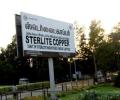
A bench headed by Justice R F Nariman said it is allowing Tamil Nadu's appeal against the National Green Tribunal order only on grounds of maintainability.
The Centre on Monday earmarked a separate Rs 2,217 crore for 42 urban centres to tackle air pollution and announced the much-awaited voluntary vehicle scrapping policy to phase out old and polluting vehicles, even as it shrunk the budgetary allocation for the environment ministry from the last fiscal by nearly eight percent. Union Finance Minister Nirmala Sitharaman, in her budget speech for 2021-22, announced a total of Rs 2869.93 crore for the ministry, Rs 230 crore less than the last fiscal. Officials said the outlay has been lesser this time as the economy is recovering from the COVID-19 pandemic.
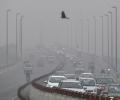
With Delhi recording air pollution levels seven to eight times above safe standards on Monday, the city government announced the return of its flagship odd-even scheme after four years anticipating further deterioration of air quality post-Diwali.

The unloading of 337 tonnes of hazardous waste from the defunct Union Carbide factory in Bhopal began at an incineration unit in Pithampur, Madhya Pradesh. The exercise, which commenced amid protests from locals concerned about its impact on health and environment, is being carried out following safety regulations. The waste, comprising soil, reactor residues, pesticide remnants, and other materials, has been transported from Bhopal to Pithampur for disposal. The Madhya Pradesh Pollution Control Board has asserted that the chemical effects of certain substances in the waste have diminished. The local administration has launched an awareness campaign to address concerns regarding the disposal process.
